The Era of Quantum AI (QAI): What Are the New Rules in Digital Marketing?
The processing power of classical computers can no longer keep up with the growth rate of artificial intelligence. While traditional systems process data sequentially, quantum computers calculate millions of possibilities simultaneously through their superposition capability. The “Quantum Artificial Intelligence” (QAI) era is not just a hardware revolution, but a massive multiplication of our capacity to understand data. If large language models (LLMs) are today’s digital renaissance, quantum-powered AI is poised to be tomorrow’s new universe.
Why is the Convergence of Quantum and AI (QAI) Inevitable?
Today’s AI models require massive data centers to train billions of parameters, creating an unsustainable energy bottleneck. When we consider today’s energy crises, the importance of this becomes evident. Whenever the slightest discussion about artificial intelligence begins, the energy crisis also comes to the forefront. So, how can quantum computers bring solutions to this problem:
- Processing Speed: In tests conducted with Google’s 65-qubit system, a 13,000-fold speed increase was achieved compared to Frontier, one of the world’s most powerful classical supercomputers. AI model trainings that used to take months have now been reduced to days.
- Energy Efficiency: D-Wave systems solved a complex optimization simulation in minutes using 12.5 kilowatts of energy (with an electricity cost of less than $1). Performing the same operation on the Frontier supercomputer would take 1 million years and consume more than the entire planet’s annual energy supply.
- Market Growth: It has been reported that the Quantum Machine Learning (QML) market reached a size of $1.99 billion in 2026 and continues to accelerate with a compound annual growth rate (CAGR) of 29.4%.
How Will Quantum AI Transform Digital Marketing?
McKinsey reports confirm that quantum computing eliminates algorithmic limitations and processing bottlenecks in artificial intelligence. The reflection of this power on the marketing ecosystem will create three major tipping points:
- Real-Time Optimization: Thousands of variables in complex data sets (logistics, dynamic pricing, real-time consumer behavior) are optimized in milliseconds using quantum algorithms.
- Flawless Forecasting: Quantum feature extraction captures non-linear patterns that classical systems miss, generating much more accurate predictions.
- Hyper-Personalized GEO: AI assistants will instantly analyze the user’s intent and synthesize your brand’s content into the most suitable format for that person from billions of possibilities with zero latency.
How Should Brands Prepare for the Quantum Era?
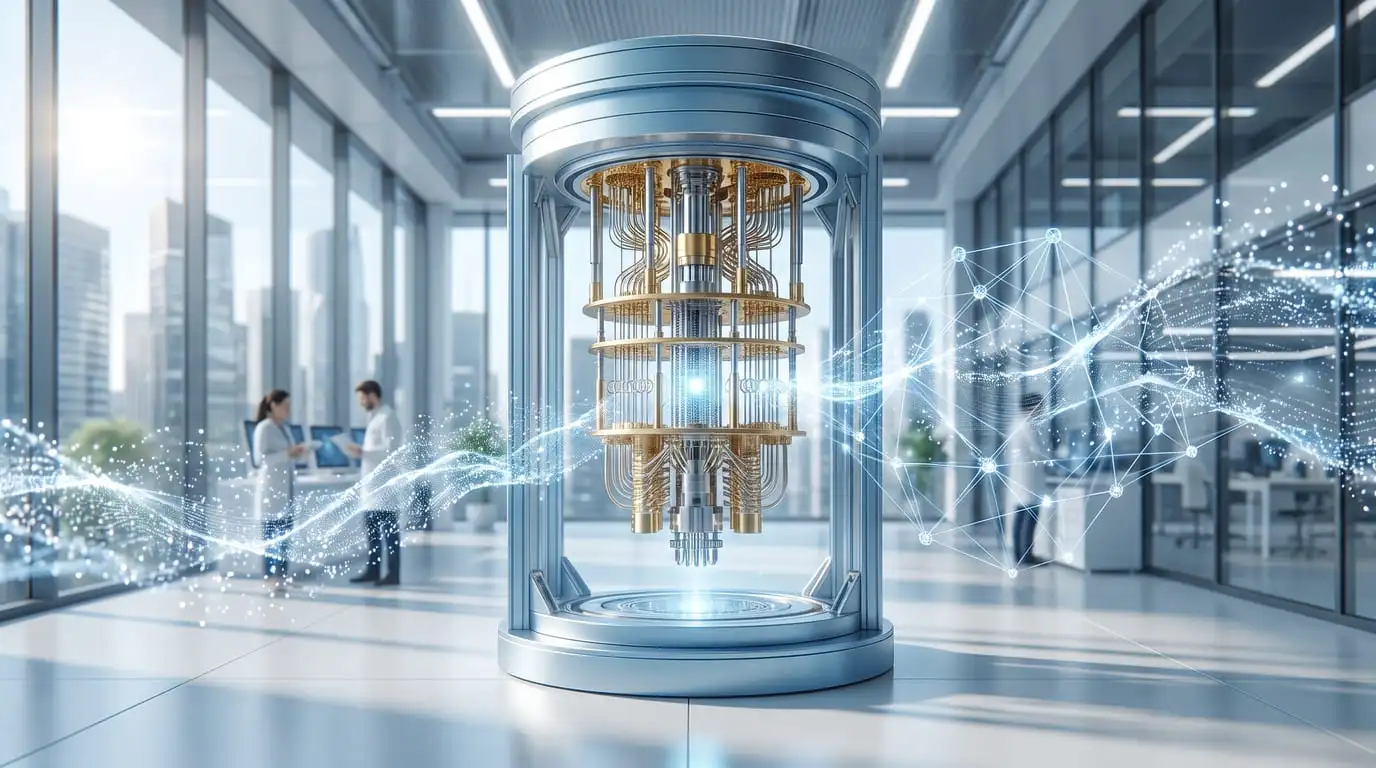
To operate, quantum computers require a temperature of -273°C (absolute zero)—colder than the vacuum of space—and massive cooling systems. Because of this necessity, brands will never install quantum hardware in their own offices. The digital growth strategy of the future will rely on the “Quantum as a Service” (QaaS) model. Companies will connect to the cloud systems of tech giants like IBM, Google, or Amazon, renting this power only at the moment of optimization they need and paying per transaction.
In recent years, it has been evident that the biggest obstacle to AI advancements is related to energy and sustainability issues. However, quantum computers have created a new horizon and vision here. Especially in these times when the energy crisis is escalating, the investment appetite for quantum computers may increase. As the data scanning speed of quantum algorithms increases, the architectural quality of the data will become even more critical. Brands that establish structured data architectures (Schema, JSON-LD) today and produce their content in a Q&A format that AI bots can easily process (chunking) will be the companies most prepared for this revolution. In this new era where classical AI performs data extraction and quantum systems solve the heaviest optimizations via the cloud (QaaS), those who begin organizational testing early will gain a definitive “first-mover advantage.”
Sources and Scientific Citations:
- Source 1: (BQP Raporu) BQP Quantum Computing AI Together 2026
- Source 2: (D-Wave & WSJ Verileri) İçin: D-Wave WSJ 6 Quantum Computing Predictions 2026
- Source 3: (Pazar Büyümesi) İçin:Research and Markets Quantum Machine Learning Market Size Forecast 2026